Stephanie Thaggard Tanner walks seven or eight miles through The Village at Castle Pines most days, the same loops through the same stands of ponderosa and lodgepole pine that have shaded this Douglas County community for decades. This year, those walks turned into something closer to a patrol. Tanner has spent recent months scanning canopy for the reddish-orange needles that mean a tree is already dying from the inside, a sign of the mountain pine beetle activity moving through Colorado forests in 2026.
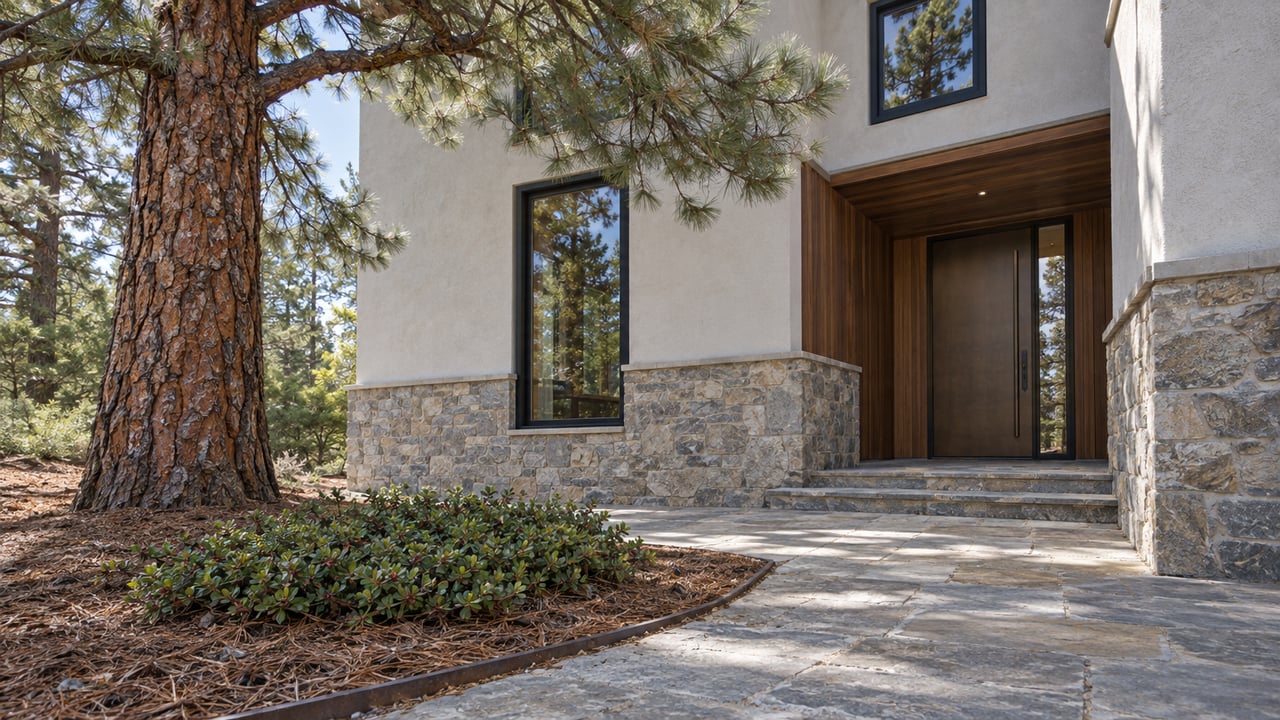
The story most people tell about Castle Pines Village is the forest itself: the way homes sit tucked among rock outcroppings, the way both golf courses here, the Country Club at Castle Pines and the Jack Nicklaus-designed Castle Pines Golf Club, run through pine-lined corridors instead of open turf. What's less visible from the road is that this canopy, roughly 250,000 trees by the community's own count, now has a resident-run maintenance operation behind it, and 2026 is the year that operation had to prove itself.
What's Actually Threatening the Canopy
Tanner chairs the Village Forest Stewardship Committee and serves as the Village Lake Firewise USA Resident Leader, and she's been direct about why beetle-killed trees matter beyond aesthetics. A tree weakened or killed by pine beetle doesn't just lose its needles. It becomes standing fuel.
"Wildfire mitigation is a big part of that, of course, but also responding to critical environmental events that arise like this year's mountain pine beetle crisis. A tree dying from pine beetle infestation becomes a fire-risk, so they're related."
That link between insect damage and fire risk is the reason a garden-variety pest problem turned into a coordinated response involving the Homes Association, the Forest Stewardship Committee, and the Castle Pines Village Metropolitan District. In April 2026, Tanner represented the community as a panelist at the Colorado Wildland Fire Conference in Fort Collins, sitting alongside town and county officials and fire agency representatives to talk through how neighborhoods coordinate this kind of work.
How the Village Earned Its Firewise Badge
The Village at Castle Pines has now officially earned Firewise USA Community Certification, a designation run through the National Fire Protection Association. Getting there wasn't a paperwork exercise. The program requires a community to stand up a real committee, complete a risk assessment specific to its own terrain, write a three-year action plan, and hold at least one wildfire risk reduction event every year, alongside an ongoing investment of volunteer time per household. Colorado already has more Firewise sites than almost any other state, but the certification only holds up if the work behind it keeps happening.
For residents, Tanner has kept the actual to-do list simple. Hardening a home against fire risk means removing the small stuff that catches first:
- Mulch pushed up against siding or foundations
- Bushes and shrubs planted close to the house
- Stacked firewood left near a structure through fire season
None of that requires cutting down the pines that make the Village what it is. It requires managing the few feet immediately around each home, which is the difference between a defensible property and a vulnerable one when a beetle-killed tree eventually comes down or catches.
The Forest Is Also Where the Wildlife Shows Up
The same dry conditions driving beetle activity have made this a year for noticing what else lives in that canopy. Douglas County wildlife officials have pointed to an unusually warm, dry winter as the reason more bears have been active during daylight hours this year, moving through neighborhoods in search of food that a normal winter would have left further into the trees. It's the kind of detail that shows up in conversation on a morning walk more than in any official report.
Smaller sightings have made the rounds too. A Village resident recently posted a photo of a beaver working Sellars Gulch, just upstream from Festival Park, and neighbors who'd never expected to see one that close to home started talking about it. None of this is dramatic on its own. Together, it's a community paying closer attention to its own tree line than it has in years, because the tree line itself is under enough stress to make that attention worth paying.
The Work Happens on Foot
None of the certification paperwork replaces what Tanner is actually doing on those seven and eight mile walks. Beetle damage doesn't show up in a spreadsheet first. It shows up as a single tree with the wrong color needles, spotted by someone who walks the same loop often enough to notice when something's changed. The Firewise certification gives that kind of noticing somewhere to go. It doesn't replace the noticing itself.
The forest that makes Castle Pines Village look the way it does was never going to maintain itself. This year made that fact explicit, and a neighbor with a walking habit and a committee title is one part of that work.
If you live in the Village and want to understand how the Forest Stewardship Committee's work or the Firewise designation might apply to a specific address, or you're weighing a move here and want the real texture behind the tree canopy, reach out to Andrew Borremans at Borremans Properties. We live in this market and we're glad to talk it through, no pressure attached.