"A haven of open space, education, and connection right here in Cherry Hills Village."
That's how the nonprofit behind Quincy Farm describes the property on its own website. It's also, by simple arithmetic, one of the most administratively important 17 acres in the city. Quincy Farm makes up close to a quarter of all the public open space and parkland Cherry Hills Village has. Not a fifth. Not a tenth. Close to a quarter, sitting on one parcel, under one conservation easement, with one barn that just finished a renovation and one pond that got dug up and redesigned in the same year.
If you live here, you've probably driven past the farm on Quincy Avenue without registering how much civic weight it's carrying. That's worth understanding, because it explains both why this city looks the way it does and why the rules on that property don't quite match each other from one side of it to the other.
The Trails Were Legal Parks Before the City Had Any
Cherry Hills Village never built a parks department the way most suburbs did. For decades, the city's own ordinance has classified its bridle trails as parks, which is the mechanism that lets tax money and city labor go toward fencing, maintenance, and liability coverage on land that's mostly still private property with an easement running through it. There's no ballfield complex, no municipal pool, no rec center anchoring the budget. Instead, the city carries a modest annual line item, ten thousand dollars from the Arapahoe County Open Space Fund, that can go toward play equipment, shelter repairs, or horse arena upgrades depending on what comes up in a given year.
That's the frame worth holding onto. A city that runs its open space through easements and small discretionary funds doesn't have much room for a single, large, deeded public property. Which is exactly why Quincy Farm stands out as the exception rather than the rule.
One Farm, a Quarter of the City's Open Space
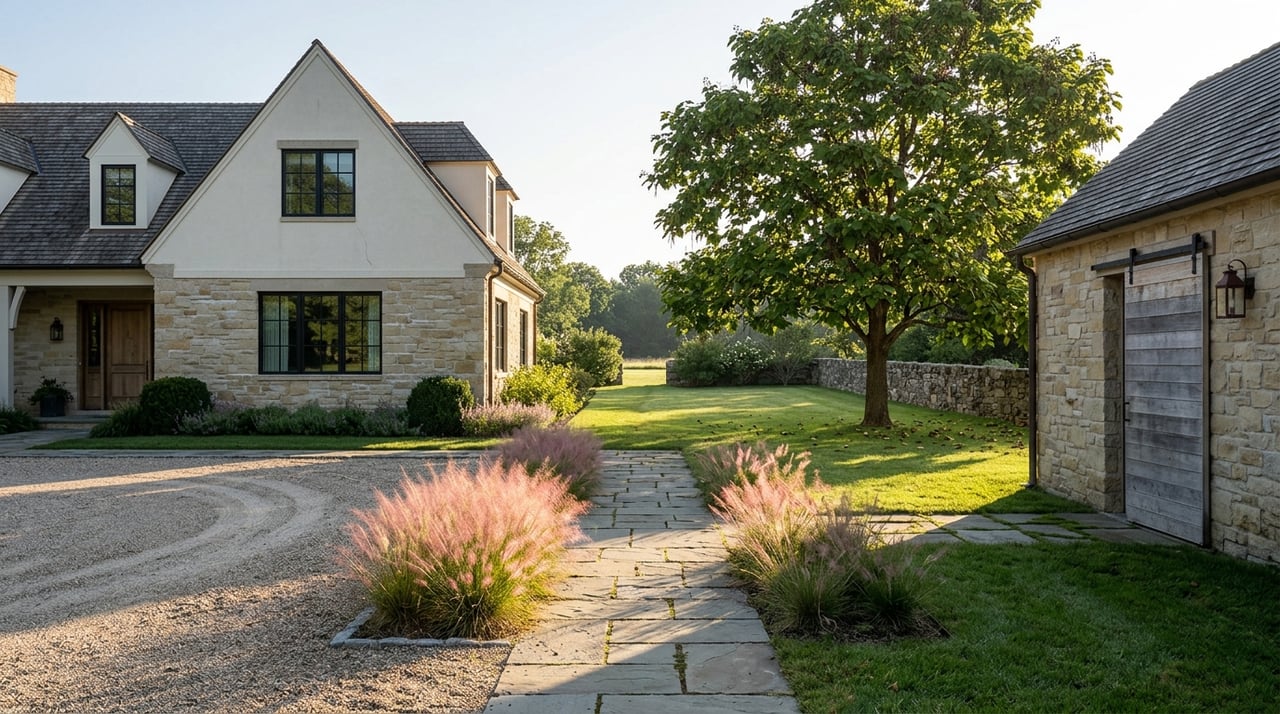
Quincy Farm is 17.5 acres along the High Line Canal, listed on the National Register of Historic Places, with a 1930s barn and what's described as the only 19th-century farmhouse left in the area. It was donated to the city by Catherine "Cat" Anderson under a conservation easement, which means its use is locked in for the long term rather than subject to whatever a future council decides.
That single donation now accounts for roughly 24 percent of the city's total public open space and parkland. In a city assembled mostly from trail easements crossing dozens of private estates, one contiguous, publicly held farm carries an outsized share of the administrative and civic load. When something changes at Quincy Farm, it moves a meaningful fraction of the entire open space portfolio at once, not a marginal update to one trail segment among many.
What Actually Changed in the Last Year
This is where the farm stopped being a static fact and became current news. The city and the Cherry Hills Land Preserve, which operates Quincy Farm under a formal agreement with the city, called 2025 a year of accomplishments, and the list backs that up. The Big Barn renovation wrapped, designed with local firm Rogue Architecture to stabilize the historic structure while preserving its original character and adding a small indoor gathering space for programs. The same year, a pond rehabilitation project began, designed with Icon Engineering and shaped by ecological recommendations from Matrix Design Group, aimed at dredging the pond to make it smaller, deeper, and a better habitat for the wildlife that uses it.
The city's 2026 Annual Plan for the farm was approved by City Council on October 21, 2025, which is the document that sets the year's programs and budget for the property going forward. And attendance backs up that the changes are landing with people: the Land Preserve counted more than 1,600 visitors across its programs last season alone.
Put together, that means the version of Quincy Farm many longtime residents remember, an untouched pasture with a barn that had clearly seen better decades, isn't the version standing there now. The barn is stabilized and being used. The pond is being reworked for wildlife rather than left to silt in.
Two Halves, Two Rulebooks
Here's the detail that actually trips people up when they visit. Quincy Farm isn't governed by one set of rules. The east side, which opened to the public earlier, allows the kind of casual use you'd expect on a leashed dog walk. The newer nature trail on the west side is a different animal entirely: a quarter-mile loop system with a crusher-fine surface, open sunrise to sunset, where dogs and bicycles aren't permitted at all.
That split isn't an oversight. It follows from how the property was actually built out. The east side functions more like an informally used pasture path. The west side nature trail was engineered later, under the stricter design requirements that come with protecting a conservation easement, and the access rules reflect that difference. The main entry point is off the High Line Canal Trail at Quincy Avenue, and there's exactly one accessible parking space on site. Otherwise, you're arriving on foot or by bike from the canal trail itself, which ties the farm back into the same trail network the rest of the city relies on for public access to begin with.
The Two Weeks That Function as This City's Civic Calendar
Cherry Hills Village doesn't have a downtown, so it doesn't have the kind of Main Street event calendar that other Front Range suburbs build a season around. What it has instead is a tight cluster of dates in late April and early May that runs almost entirely through Quincy Farm and the surrounding trail system.
- April 26: The Cherry Hills Land Preserve's Earth Day event at Quincy Farm
- May 2, 9 a.m. to noon: The city's own Parks & Trails Scavenger Hunt, split into a park version and a trail version with staggered start times, one at 9:30 for individuals and one at 9:40 for teams
- May 16: The city's Spring Cleanup
That May 2 event is worth a second look, because it's a good window into how small-scale this city's civic operation actually is. At an April 2025 meeting of the Parks, Trails and Recreation Commission, the vice chair's suggestion for scavenger hunt prizes was simply Cherry Hills Village water bottles. This is a volunteer commission overseeing a National Register-listed farm and a citywide trail network, spending part of a public meeting deciding what to hand out as a prize.
Beyond the spring cluster, the Land Preserve also runs an annual Barn Party that was, by its own account, well attended again in 2025. None of these events require a car or a ticket booth. They're built around trail access, which means the same infrastructure carrying your evening walk is also carrying the city's entire public gathering calendar.
How a City With No Downtown Runs Its Public Life
Even the small stuff shows the pattern. Three Pond Park, another node in the trail network, has a documented parking limitation that's come up at city meetings as an ongoing constraint rather than a one-time complaint. There's no fix pending because there's no budget category built for expanding parking at a trail-side park. That's consistent with everything else here: a city that never set up a conventional parks department, choosing instead to run its public realm through an ordinance, a scattering of easements, one line item, and one farm that happens to carry a quarter of the load.
If you've lived in Cherry Hills Village for a while, this probably explains a few things you'd noticed but hadn't quite connected: why there's no central gathering spot the way other suburbs have one, why the same names keep showing up at Land Preserve events, why a single barn renovation felt like bigger news locally than it would anywhere else. The infrastructure here was never going to look like a typical suburb's parks system. It was built around estates, easements, and one very specific piece of donated land, and that's still exactly how it works.
If you're weighing what your property is actually worth in a market built this differently, or you're curious how a neighborhood with this little conventional public infrastructure holds its value the way it does, Borremans Properties can walk through it with you, starting with a free home valuation specific to Cherry Hills Village.
Andrew Borremans, Borremans Properties