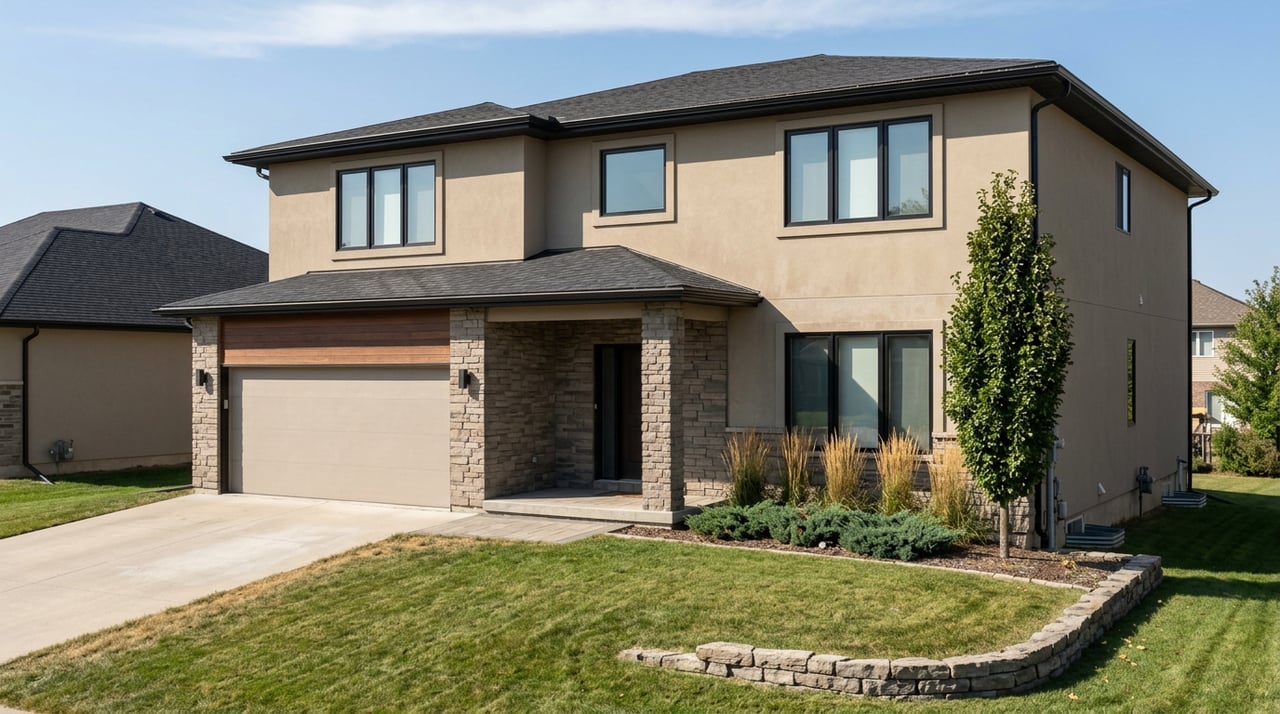
A relocating buyer moving into Lone Tree this fall did what any careful buyer should do: she read the city's own economic development page before writing an offer. It said, plainly, that Lone Tree has no municipal property tax. She took that as the whole answer. Then she got her first full-year estimate from the title company on a home near RidgeGate Parkway and the number didn't match the story she'd been told.
Both things are true. Lone Tree really doesn't charge a city property tax. And a buyer in the wrong part of town can still end up with a tax bill that looks nothing like "no property tax." The gap between those two facts is the part worth understanding before you sign anything, especially if you're comparing Lone Tree against Parker, Highlands Ranch, or another Douglas County suburb on the strength of a headline you saw on a city website.
What "No Property Tax" Actually Means
The claim itself checks out. Lone Tree's city government runs on sales tax, not property tax, and the city has been upfront about that structure: no municipal property tax, healthy reserves, an AA+ bond rating, and one of the lowest sales tax rates in the Denver metro area. That's a real and unusual municipal finance model, and it's part of why the city can fund police, the arts center, and parks without a line item most Colorado cities depend on.
But the city's own tax page says the quiet part just as clearly: property taxes in Lone Tree are administered by Douglas County, and the county assessor determines value while the city, the county, school districts, and special districts each set their own piece of the mill levy. The city choosing not to levy is one decision. It doesn't stop the other taxing authorities from levying theirs.
The Layers That Stack on Top
A Lone Tree property tax bill is really several separate bills added together, and only one of those layers is guaranteed to read zero.
| Taxing layer | Who sets it | Does "no property tax" apply here? |
|---|---|---|
| City of Lone Tree | City council | Yes, zero municipal property tax |
| Douglas County | County commissioners | No, county levy still applies |
| Douglas County School District | School board | No, DCSD levy still applies |
| Metro district (if your address has one) | District's elected board | No, and this is the layer that varies most |
The county and school district portions apply to essentially every Lone Tree address and don't swing wildly from block to block. The metro district line is different. It only exists where a developer created one, and where it exists, it can be the single biggest variable in what two otherwise similar homes end up paying.
The Line That Actually Varies House to House
Metro districts get confused with HOAs constantly, and the confusion costs buyers real money if it isn't cleared up before closing. An HOA is a private organization funded by dues, and it has no authority to tax anyone. A metro district is a public entity, created under Colorado law, with the legal authority to tax current and future property owners inside its boundary, and it's regulated by the Colorado Department of Local Affairs.
Heritage Hills is a good example of how the two coexist without being the same thing. The Heritage Hills HOA handles covenant enforcement, design review, and community events, and it doesn't operate or maintain any property in the neighborhood. The Heritage Hills Metropolitan District is the separate public entity that actually funds and maintains the infrastructure, and its mill levy shows up on the county tax bill, not on an HOA invoice. If you only read your HOA disclosure packet, you never see the metro district at all.
Most master-planned sections of Lone Tree built out since the 1990s, including much of RidgeGate, carry one of these districts. Older, already-established pockets of the city may not. There's no shortcut to knowing which is true for a specific address other than checking.
A District's Status Can Flip Without Warning
Metro districts aren't static, and that's the part a headline stat can't capture. A metro district's mill levy is set annually by its own board to cover current operating costs and debt service on the bonds that financed the original roads, sewer, and drainage infrastructure. Some districts sit dormant for years and then become active again as new construction phases come online.
Rampart Range Metropolitan District No. 9, which covers property near the intersection of Peoria and Ridgegate Parkway in Lone Tree, is a real, current example. Its most recent transparency filing with Douglas County shows the district collected zero dollars in ad valorem tax revenue during 2025, and notes that the district returned to active status on October 23, 2025. A buyer who looked at that address a year earlier and a buyer looking at it today are looking at two different financial pictures, even though nothing about the house itself changed.
That's the actual risk. It isn't that metro districts are hidden or improper. Colorado requires an elected board, transparency filings, and DOLA oversight. The risk is timing: a district that's quiet this year can become active next year once its board authorizes a new levy, and that shift won't show up anywhere in a standard HOA resale packet.
What This Looks Like in Real Numbers
Public property records along Ridgegate Parkway in Lone Tree show a median annual property tax bill of $5,609, with individual bills on that same short stretch of street ranging from about $4,150 to $7,250. That's not a difference in home size driving the spread. It's a difference in which taxing layers apply to which parcel.
Zoom out to the county level and the same pattern holds. Douglas County's median property tax bill sits at $4,516, well above the $2,400 national median, even though the county's overall effective rate runs below Colorado's statewide median. Castle Pines carries the county's highest median tax bill at $6,481. Englewood carries the lowest at $2,698. Lone Tree itself, in the 80124 ZIP code, shows a median effective property tax rate of about 0.60% and a median tax bill of $5,152, a rate that runs above the county's own broader median even though the county as a whole markets itself as tax-friendly.
None of that contradicts what the city says about its own budget. It does mean that "Douglas County has low property taxes" and "this specific Lone Tree address has low property taxes" are two different claims, and only one of them is guaranteed by the county's reputation.
Before You Write the Offer
A few things are worth confirming before you're under contract, not after:
- Ask your title company to order a metro district certificate as part of the title commitment, separately from any HOA resale documents. The two are pulled from different sources and one doesn't substitute for the other.
- Check the specific parcel against Douglas County's list of active special districts and its most recent transparency notice, since a district's status can change year to year.
- Ask whether the district's bonds are newly issued or near payoff. A district years from retiring its debt is a longer-term cost than one close to the end of its bond schedule.
- Compare all-in carrying cost, county plus school plus metro district plus HOA, rather than comparing list price alone against a home in Parker or Highlands Ranch that may not carry the same metro district layer at all.
A Few Questions Worth Asking Directly
Does every home in Lone Tree sit inside a metro district? No. Older sections of the city predate the master-planned development wave. Much of RidgeGate and named communities like Heritage Hills do carry one. The only way to know for a given address is to check it directly rather than assume based on the neighborhood's general reputation.
Do metro district mill levies eventually go down? They can, once the bonds that financed the original infrastructure are paid off, but that can take decades depending on when the district issued debt. A district that just took on new bonds is a different math problem than one approaching payoff.
How do I confirm whether a specific address carries an active assessment right now? Have your title company pull the metro district certificate as part of the title commitment, and check the district's most recently filed transparency notice with Douglas County before you finalize an offer.
Lone Tree's tax pitch is honest as far as it goes. The work worth doing is figuring out how far it actually goes for the specific address you're writing an offer on, before that number shows up on a closing statement instead of a conversation.
If you're weighing Lone Tree against another Front Range suburb and want the full carrying-cost picture laid out address by address, or you need to know what your current home is worth before you commit to the next one, Borremans Properties can walk through both sides of that math with you. Get a free home valuation and a straight answer on what a specific Lone Tree neighborhood will actually cost you at closing.
Andrew Borremans, Borremans Properties